Deep Theology in audiobook form!
This book is a rare jewel.
Most audiobooks, by nature, are simple. It is very difficult to listen to complex theological doctrine in audiobook form. Think of how hard it would be to follow John Owens, "Death of Death" with someone reading it to you. But In this case it works.
First things first. Alcorn takes a very difficult subject and makes it accessible to the normal person. This is a monumental feat in and of itself. Add the ability to follow it easily in audible form, and we have ourselves a great audiobook.
The subject has been debated for 2000 years and Alcorn does not break new ground here, but neither does anyone else who writes on the subject. What he does bring is a logical and balanced voice to the freewill debate.
What sets this book apart from many others is the attention to fairness in debate. Most people, when debating, set up straw men and knock them down. They take another’s position, stretch it our past what the person actually believes, knock it down, then say they have destroyed their argument. In reality, they have only destroyed a caricature of the true argument. In the end, that leaves no one convinced and only preaches to the choir.
Randy Alcorn, takes a different approach here. He lets both sides speak for themselves. He is fair and does not use logical fallacies to win his argument.
I believe a book like this can bring both sides together for a calm discussion without raising one’s blood pressure.
The narration was spot on. Randy does his own narration and does a fine job at that. Sometimes you forget you are even listening to an audiobook and feel you are listening to a lecture. The narration was clear and read at a speed that makes it easy to understand.
I loved this book!
I highly recommend this audiobook and give it a 5 out of 5 star.
I enjoyed this book courtesy of the Christian Audio review program at http://christianaudio.com and received the audio book, free of charge, from ChristianAudio.com in exchange for an honest review.
 I tend to gravitate toward unusual books. Today, best sellers are usually "10 steps to this" or "three steps to that". Those kind books are about as deep as a thimble of water. They are soooo boring. Give me something I can sink my teeth into. When I saw this book, it really peaked my interest - How can family become an idol?
I think what drew me to listen to this book is the fact that in today’s society the family is derided so much. From the idiot dads, to the single parent households, the nuclear family is all but extinct. So how can it be placed as an idol when no one cares about it anymore?
If an idol is something we replace God with and the family is considered "out of date", how can it become an idol?
When starting this book, I felt I would be disappointed - Ho Hum, another Hipster Postmodern Neo-Calvinists whipping himself in public to show everyone how humble he is.
I WAS WRONG. What I saw here was a man who seemed to have it all, but was miserable because he placed his dream of a perfect family in the place of God’s will. In places, you can see the pain that both he and his wife have faced.
This idol of the family was created because of our culture’s desire to destroy the family. In many cases, the Christian pendulum has swung too far in the opposite direction. We have placed family as such a priority, that all else pales in comparison.
How do we get our priorities right? Place God back on the throne! When we place Him first, all other things will fall into place.
All in all, this was a very good book. The narration was very well done and the sound was crisp and clear. They have Adam Verner (male) as narrator for Ted’s part and Amy Rubinate (female) for Kristin's. Both do a great job.
I enjoyed this book and would highly recommend it, especially for those Hipster Postmodern Neo-Calvinists, of which I am a part of - minus the postmodern.
I highly recommend this audiobook and give it a 5 out of 5 star.
I enjoyed this book courtesy of the Christian Audio review program at http://christianaudio.com and received the audio book, free of charge, from ChristianAudio.com in exchange for an honest review.
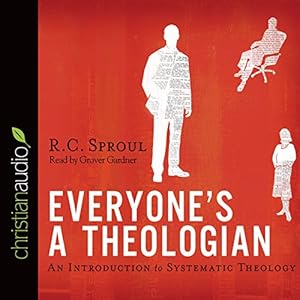
 R.C has always been my favorite Theologian. I was introduced to the reformed faith through many of his writings. So when he writes a new book, I jump at the chance to read it. In this case I was blessed to listen to it.
This book is basically a short Systematic Theology. But do not let that description fool you. It contains much depth. He called in an introduction but it covers every major theme in Theology.
Each chapter takes a subject from the Bible and explains it out using scripture. It is written with the average person in mind. R.C. has always had an ability to explain doctrine to the average person. Here he is at his finest.
The book alone would be worth listening to even if read by an average Joe, but this one was narrated by the one and only Grover Gardner. Gardner is an award winning narrator, and he is my personal favorite. He could probably read the phone book and make it interesting. So what do you get when you put a top notch theologian and an award winning narrator? A perfect combination. It reminds me of the old commercial – “You put peanut butter on my chocolate.”
I truly loved this audiobook and highly recommend it to all
I give it 5 out of 5 stars.
I enjoyed this book courtesy of the Christian Audio review program at http://christianaudio.com and received the audio book, free of charge, from ChristianAudio.com in exchange for an honest review.
 Politics and Religion, those are the two things we are never supposed to talk about. In this audiobook, Chip Ingram does that very thing. He takes us though subjects that most Christians have never heard a single sermon on. He delves into a list that tent to start angry debates.
The following is a partial list of subjects covered:
Sex
Homosexuality
Abortion
The Environment
These are controversies that could be taken from the front page of today’s newspaper. They touch each of our lives in one way or another. If they do not directly affect us, they usually do through our friends and loved ones.
Ingram's writing is easy to read (or in my case, listen to) and the information is every informative. He not only shows the beliefs held on both sides of the issue, he gives a biblical understanding on each subject. The last part of the book is written in a question and answer format. Here is where the book really shines. He takes the hard cases and shows how to give not only a biblical answer, but he does it with a pastor's heart. The book is clear and precise, yet loving and sensitive.
I enjoyed the narration tremendously. I felt like I was listening to a lecture more than an audiobook. The audio was clear and professional.
If you feel that the world is changing way too fast and you need to get a handle on these subjects, please consider this book.
To wrap it up - Read or listen to this book!
I highly recommend this audiobook and give it a 5 out of 5 star.
I enjoyed this book courtesy of the Christian Audio review program at http://christianaudio.com and received the audio book, free of charge, from ChristianAudio.com in exchange for an honest review.
 This book was a little different that I expected. Full of life and zeal, there is an excitement about who God is and what he does. God is in control! Because God is sovereign we can marvel at who He is.
Here, Montgomery and Jones, show us the wonder of a sovereign God. If God is in control, we have nothing to worry about. Many are offended when told that God has control of every situation. They can only look at the bad things that happen in the world and say it must be God's fault. Would it not be better that God is in control than us? If something bad happens we know He has a reason. Something is bringing Him glory. If we are in control and something bad happens, it has no reason and nothing good can come out of it.
The Bible says, "All things work for the good of those who are called". If God is not in control of everything, that statement has to be false.
Here they also show us that it is natural for people to believe that works are how we get right with God. But natural man is fallen and blind. What he believes is a lie. The only way to be right with a holy God is through the sacrifice of Christ. Grace is totally unmerited favor.
Through the whole book, the authors show us what is usually called the 5 points of Calvinism. Because of the negative feelings that come with that terminology, they prefer not to be called Calvinists.
I truly enjoyed this book and highly recommend it to all. If you want a book that will melt your heart and give you a new sense of wonder about our God, this is the book to read.
I recommend this book and give it 5 out of 5 stars.
I received this book, free of charge, from Zondervan and Netgalley in exchange for an honest review.
 Today, it seems like there is an Atheist behind every bush. It has become "cool" to believe that there is no God. While in college, many young people are devastated by professors who take a sledgehammer to the Christian faith, leaving the student in doubt and even depression.
In this well written book, the authors have given us an antidote to the disease that is spreading in many colleges. Truth Matters, give a reason for our faith.
The book is based around Bart Ehrman's arguments against the Bible. Ehrman, a professor at UNC has written multiple books claiming that the gospel as we know it is simply not true. These books have destroyed many peoples faith because they were not prepared to counter his arguments. Here, Kostenberger, Bock, and Chatraw counter Ehrman's arguments.
Many professors take advantage of new students. It is like shooting fish in a barrel. They know that most teens only know about the bible from what they learned in youth group. In the first week of class they can silence all arguments as they place another notch on their guns - another easy kill.
In this book, Kostenberger and company provide some practical information for stemming the tide and helping the student fight back. They provide a stepping stone for those who do not want to bury their head in the sand.
I enjoyed this book tremendously and highly recommend it especially to students.
I give it 5 out of 5 stars.
I received this book, free of charge, from B&H Publishing Group and Netgalley in exchange for an honest review.
 To my surprise, this was not a book about the origins of the Bible or apologetics. But it was a good surprise. In stead of an apologetics book, we have a love letter to God's word. DeYoung teaches us what it means to fall in love with God's word. He takes us through the Bible and shows us what it says about itself. God's word calls us to love God's word.
Because the Bible is the very words of God, we should treat it as such. It should be studied and reverenced. It should be a guide to lead us to God, the author.
The writing is short and to the point and the Language is simple and easy to understand. Here is a book for anyone from new believer to a Bible professor.
Because this is the audio version, I want to add that the narration is very good and fits the material.
If you are looking for a short enjoyable book to read during quite time, this may be the book for you.
I highly recommend this audiobook and give it 5 out of 5 stars.
I enjoyed this book courtesy of the Christian Audio review program at http://christianaudio.com and received the audio book, free of charge, from ChristianAudio.com and Crown & Covenant Publications in exchange for an honest review.
 This is the first book I have read by Anyabwile and it will not be the last.
In this short book, Anyabwile teaches us to stare. Remember when you parents told you it was rude to stare at someone? Here, Thabiti gives us permission to stare at what God has accomplished for us in the death and resurrection of Christ.
When we contemplate what He has done we become captivated. We see the world in a different light. Life has so much more meaning.
The book is written in an easy to read format. Anyabwile takes theology and explains it in a way that even the young in Christ can understand. With this in mind we can understand that the Gospel is so profound that people can spend a lifetime and never plumb it's depths. On the other hand, when Christ enlightens someone’s heart, even simplest person can see and experience it.
In 5 short chapters he takes us through the suffering, death and resurrection of Christ. Here is a list of chapters with a short summary.
1. Is There No Other Way? (Christ had to die in our stead. We could not save ourselves.)
2. Why Have You Forsaken Me? (What was it like for Christ to be forsaken by the Father?)
3. Where, O Death, Is Your Victory? (How did Christ defeat death?)
4. Why Do You Seek the Living among the Dead? (all other religious leader are dead except one!)
5. Do You Not Know These Things? (We need to know Christ in the power of His resurrection)
This work would make a great devotional. If you take one chapter a week and meditate on it, I believe it can be extremely beneficial in your walk with Christ. It is also a good read for those who do not know the Lord. To see what Jesus accomplished may lead the sinner to Christ.
I recommend this book and give it 5 out of 5 stars.
I received this book, free of charge, from Reformation Heritage Books and Cross Focused Reviews in exchange for an honest review.
 Keller is always a good read, or in this case a good listen. He takes us through the first seven chapters of my favorite book of the Bible, Paul’s letter to the Romans. We hear about such weighty subjects as Depravity, Salvation, Sanctification, etc. With that said, Keller uses very understandable language to explain some of these most profound doctrines.This is not a dry theological tome. It is warm and practical but also contains some good meat for reflection. I guaranty you will gain something from a reading. It is short enough to leave you wanting more. I am looking forward to the next volume when he touches on verses 8 to the end of the book.Keller adds some great quotes from theologians of the present and past. Each chapter contains questions for reflection.The narration was great. This is the first time I have heard Maurice England. He has a very comforting voice that lends itself to the material. The quality of recording was also top notch. No hisses or pops. It was recorded with good crisp highs and smooth lows.I enjoyed this book and highly recommend it to all who desire to have a greater understanding of Romans and the Gospel.I give it 5 out of 5 stars.I enjoyed this book courtesy of the Christian Audio review program at http://christianaudio.com and received the audio book, free of charge, from ChristianAudio.com and The Good Book Company in exchange for an honest review.
 Here is another multi-view debate on a biblical subject. With most books of this genre, we have a non-essential doctrine debated. When speaking of “the timing of the second coming” or whether “tithing is for today”, there is very little harm to the new believer or even the unbeliever when hashing out these kinds of subjects. But this volume is much more serious. I feel that in some ways it branches out a little too far.
Can a person be an evangelical and also deny that the bible is true and without error? Would that person be beyond the pale of orthodoxy?
I can not speak for the rest of Evangelicals, but I personally believe that those who deny inerrancy may well have stepped over that line. If we believe that Jesus said things that were incorrect “fact-wise” about this world, how can we believe Him when he speaks about things in the next? Doesn’t the Bible say those things that are invisible are more real than the visible? The things we see are decaying and falling apart, but those things that are not seen are eternal and will last forever.
I will have to admit that I started this book with a particular presupposition and after finishing it, I came out with (please forgive me for saying) the same "post-suppositions". I will not say the arguments against classical inerrancy could not convince some people, but I personally think they are found lacking.
As just one example, here is a quote from Peter Enns:
"This is why I feel that the term inerrancy has run its course and that evangelicals need to adopt other language with which to talk about the Bible. As referenced repeatedly in this essay, one suggestion I have articulated is an incarnational metaphor: Scripture is a collection of a variety of writings that necessarily and unashamedly reflects the worlds in which those writings were produced."
So, Enns believes that the Bible is a "reflection of" or "conforming to" the world of that day. I understand that Enns is not using the word "world" in the same since as Paul when he said we are not to be "conformed to this world", but it does sound a little weird to say God is reflecting the beliefs of the world when he spoke.
Enns believes the Bible contains errors but he will not come right out and say it. Why does he not just say what he means? "The Bible is a man-made book that contains errors - plain and simple." Why dance around with nebulas phrases that cover up the real meaning. Either the Bible is God-Breathed or man-breathed. If God wrote it, like Jesus claimed, how can we say it has mistakes and errors?
Like Calvin, I believe God uses a sort of baby-talk to speak to man. God has to, in some since, talk down to us. He is infinite and we are finite. It is like Michael Moore trying to fit into skinny jeans – It ain’t happinin’. But there is a big difference in talking down to a baby and telling that same baby a flat-out lie. I could have told my son, when he was a toddler, that the sky is blue and that would be true in some sense. Even though it is really made up of all colors, because of our atmosphere, blue is the most visible. On the other hand if I told him the moon was made of cheese...that is a lie. In the same way, if the walls of Jericho did not exist, then the Bible is not truthful when it says the walls feel down. If this were the case, the Bible is not accommodating the finite mind of man; it is misleading man all together.
Our finite minds can not comprehend an infinite God, but the little amount God allows us to comprehend is true.
I enjoyed this book and recommend it with "much" reservations.
I give it 3 out of 5 stars.
I received this book, free of charge, from Zondervan and Netgalley in exchange for an honest review.
 Proverbs 18:17 reads, "The one who states his case first seems right, until the other comes and examines him."(ESV) This scripture has become a motto for me in connection with my theological studies. From the earliest time in my Christian life, I have "tried" to consider the other side, if for no other reason than to be able to give an answer for my own beliefs. I put "tried" in quotes because I understand that it is impossible to be totally unbiased. The desire to see more than one view of a subject is why I look forward to every new book in the Counterpoints series. Each book in the series takes a theological subject and debates the various views.It is always good to see both sides of a story before making a decision. In this case there are four sides to the story.Each contributor gives his reason for his belief for or against the historical Adam. Was there a real person we call Adam? Was he the first human? Did sin originate with him?I felt this would be a great subject. I was a little disappointed that a majority of the debate concerned evolution. I understand that evolution has to be discussed, but it seemed to take center stage. Even though the book was interesting and well written, I felt there could have been much more exegesis of the text.Even though the book kept my interest all the way through, to be honest, some contributors were much better than others. I think the pastoral reflection by Philip G. Ryken at the end was worth the price of admission. If all contributors wrote with such passion I would have given the book 5 stars. Personally I think rejecting the historical Adam seems to ride very close to the edge of heresy. I am not questioning the salvation of such men. I believe Jesus died for sin which includes our intellectual mistakes. When Jesus himself believed Adam was real, those who believe he is not seem to be saying that the sinless Christ made a mistake.All-in-all I enjoyed the book and learned a lot. While technical in some places, it was still fairly simple to follow. I personally would suggest reading Ryken's reflection first!I recommend this book with a few reservations and give it 4 out of 5 stars.I received this book, free of charge, from Zondervan and Netgalley in exchange for an honest review.
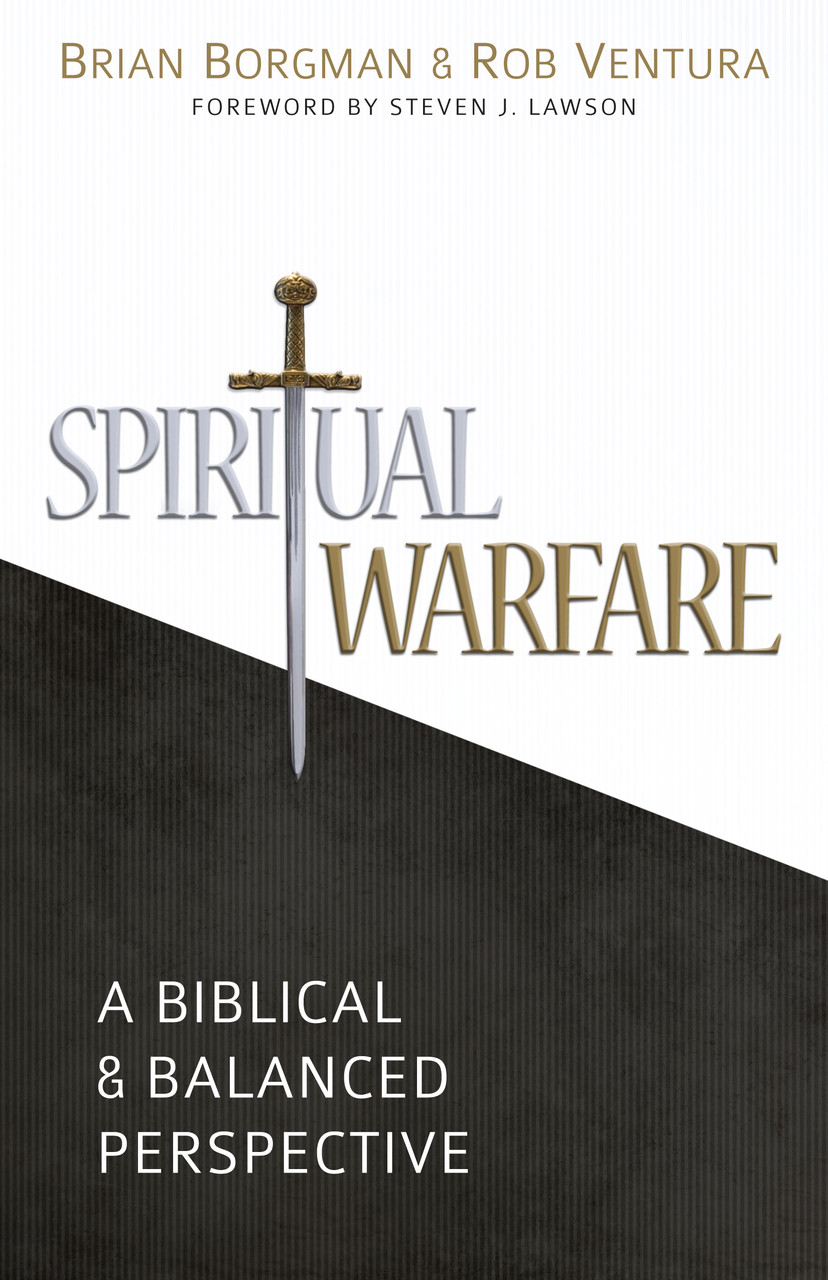
 Hearing the phrase "Spiritual Warfare" brings to mind pictures of exorcisms and demon possession. We think of deliverance ministries or of Frank Peretti novels. For a long time we have needed a balanced view on the subject. I believe Brian Borgman has given us that balance.
Many times a book on this subject will be too far in one extreme or another. One author believes that there is a demon under every bush, and another believes that the devil does nothing today. Both of these suffer from an unbiblical and unbalanced point of view.
The book, "Spiritual Warfare", shows us that the devil is real and we are in a war. The war we are fighting is not against other people. It is against the devil himself and his angels. Using the illustration given by Paul in the book of Ephesians, Borgman takes us through each piece of the Christian’s armor, describing each part and its use. He shows us in a very practical way how to win this war.
I especially enjoyed the Appendix sections:
Appendix 1: The Sovereignty of God and Satan,
Appendix 2: Can a Christian Be Demon-Possessed?,
and Appendix 3: Christian, Pray for Your Pastors!
Borgman gives us a good understanding of the war we are in and how to win it. Packed full of encouragement and instruction, his book leaves you with more weapons than you started with.
If you are interested in the subject of warfare, this is a great place to start. Simple and easy to read, it is a great gift for a new believer.
I recommend this book and give it 5 out of 5 stars.
I received this book, free of charge, from Cross Focused Reviews and Reformation Heritage Books in exchange for an honest review.
 Having read and enjoyed Jeremy Walker's writings before, I looked forward to this book.
"Life in Christ" is basically a book about the gospel. What must I do to be saved? Walker tells us - Look unto Jesus! It is not ourselves, our church, our family, our money, etc. It is Jesus and Him crucified! Jeremy does not stop there. He shows us what our life in Christ should look like and how God, not only changes a person, but births a new creation in them. We are not the same. We are new creatures.
This book is very understandable and easy to read. In some places I felt like I was reading a sermon from Spurgeon. Here is a small example:
"We look to Him at Calvary. There hangs the suffering, bleeding, dying Lamb. Look to Him, with the crown of thorns piercing His noble brow. Look to Him, with the blood pouring from His hands and feet, cruelly pierced with Roman nails. Look to Him as the gore drips from His wounded flesh, torn from His back by a vicious scourge. Look to Him as He bows His head in agony under the weight of His holy Father’s just anger against sin. Look to Him as He cries out from the midst of an impenetrable darkness, “My God, My God, why have you forsaken Me?” Look to Him as He shouts with a loud voice, “It is finished!” Look to Him as He yields up His Spirit."
Wow, Just thinking of what Jesus done brings tears to our eyes. He took our place. He was punished for me! Like I heard an old preacher say years ago, "If that don't fire you up, your wood must be wet." What a savior we have!
I loved this book. It is not only written with sound doctrine, it also has, what Edwards called "Religious Affections". It will stir your heart toward Christ. If you need encouragement, not the feel-good self-esteem kind, but true gospel edification, this is the book for you.
I highly recommend this book to all, believer and unbeliever alike, and I give it 5 out of 5 stars.
I received this book, free of charge, from Reformation Heritage Books and Cross Focused Reviews in exchange for an honest review.
To Hear some great interviews follow these links:
http://www.janetmefferdpremium.com/2014/01/16/janet-mefferd-radio-show-20140116-hr-3/
and
http://confessingbaptist.com/podcast038/
 I have always thought of the Heidelberg Catechism as a strictly Calvinist document. Here, Lyle D. Bierma, convinces otherwise.
Over the years, I have read a few commentaries on the Heidelberg, but this book is a little different. It is not a commentary, per se; it is more of a history of its theology.
Bierma's thesis is that the catechism was a synthesis of Calvinism, Lutheran and some times Zwinglian theology. He believes it was an ecumenical document to be used in more than just the Calvinist Reformed churches. His arguments are precise and convincing.
In this work he takes us through each question of the Heidelberg comparing them to other catechisms and documents of the time. His goal is to prove that the origins of the wording were taken from multiple sources.
In this short but convincing work , Bierma accomplishes the task he sets out to perform. The writing is straight forth and readable. I believe the sections concerning baptism, the covenant, and the Lord's Supper are the most persuasive.
I enjoyed this book and will now look into reading, what seems to be, the companion volume, "Introduction to the Heidelberg Catechism", by the same author
Though not for everyone, I recommend it and give it 4 out of 5 stars.
I received this book, free of charge, from Westminster John Knox Press and Netgalley in exchange for an honest review.
 I have had the privilege to read a number of books or booklets in the "Basics of the Faith" series. They have all been a great blessing and this one is no exception.
This is also the second book I have read by Barrett and I am very impressed. His writing is excellent and I will read him again in the future.
In this small book, he takes the subject of his larger volume, "Salvation by Grace: The Case for Effectual Calling and Regeneration" and condenses it into 40 pages. Focusing on regeneration, he gives us a very understandable overview of the subject. Using scripture to back up each statement, Barrett shows us that God is the one who makes us alive. We can not birth ourselves. We are born not of the will of man, but of God himself.
He shows us the difference in the “gospel call” and the “effectual call”. The “gospel call” is the outward call while the “effectual call” is the moving of God upon the heart. We see what it really means to be "born again" and how God gives us a new heart. We also see how God opens the heart to see the things of God. Because we are born blind and in sin, God gives us light to understand and the new heart to accept it.
Even though this book is very small, it was a great read. I think this would be a great resource for those who are new in the faith and would like a short and readable explanation of what God worked in their hearts to bring them to Himself. It would also be a great introduction to regeneration for those who feel that the 429 page, "Salvation by Grace", is a little long.
I loved this book and I give it 5 out of 5 stars.
I received this book, free of charge, from P & R Publishing and Netgalley in exchange for an honest review.
 I remember the first time I read that Martin Luther, the great reformer, hid nuns in herring barrels to sneak them out of a monastery and find them husbands. That was the day I feel in love with the study of history.
Over the years, Church history has become a passion. Needless to say, when I saw this book offered for review, it was a no-brainer.
In this short book, John Fea gives us the reasons everyone should read and study history. He has taken his introductory lecture as a professor and edited it into a very readable book. I am sure that lecture has created many history majors.
In the book, he shows the connections and non-connections that history has for the present day. We have all heard the quote that those who don't learn from history are doomed to repeat it. According to Fea, This is only half of the story. History can be used to learn lessons that benefit the future and it can also be abused.
At first glance, we would think most Americans believe history is boring and unimportant. Fea shows that America is almost obsessed with History. We play games with a historical setting, read historical novels, biographies, and television shows. History is anything but boring.
When you read, "Why Study History?" you will come away ready to read some good books and maybe take a few classes. John Fea has written a good book to spark an interest in history. Whether you are a student or layperson, you will come away inspired and excited about history.
I enjoyed this book and give it 5 out of 5 stars.
I received this book, free of charge, from Baker Academic and Netgalley in exchange for an honest review.
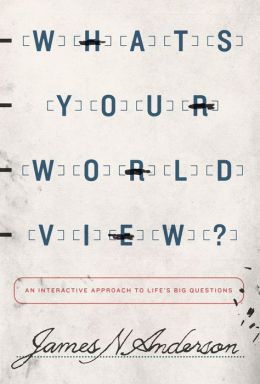
 What is a Worldview? Everyone has one, but not many people know what their worldview is.
James N. Anderson has written a short easy-to-read manual to help you find out what our worldview is. What is unique about this book is its format. Set up like a “Choose Your Own Adventure”, we read as a child, Anderson makes the complicated task of discovering your presuppositions very easy.
Starting with some profound questions like, "Do you have the power to make free choices?" and "Is there any objective truth", he directs you to different parts of the book according to how you answer at the end of each chapter. Each chapter contains one to three pages. That makes for a quick and enjoyable read.
No matter what your belief system, this is a good read. It is impressive at how much information he has packed in such a short book. On the one hand, the size of the book is a strength, but on the other, it has some weaknesses. Being short, it would be easier to get a friend to read. But being this short means he was not able to go deeper into some subjects.
All in all, this is a great read to give to unbelieving friends and co-workers. It could open up some good conversations and lead to sharing the gospel.
I enjoyed this book and give it 5 out of 5 stars.
I received this book, free of charge, from Crossway and Netgalley in exchange for an honest review.
 When speaking of truth, you will more times than not, hear the phrase, "That’s true for you, but I don't believe that way." In our postmodern, relativistic society we have not just lost the knowledge and understanding of what is right and wrong, we have turned ethics on its head.
Why has the world seemingly been turned upside down? Why has conventional wisdom about right and wrong been discarded? I think Scott B. Rae gives us some answers in this short but intriguing book.
Here we have a book about ethics in today’s postmodern culture. Rae takes us through an array of subjects from Politics to Medicine. He shows us that the Christian worldview is the only logical and correct understanding of what is right and wrong. We see here that there are correct and incorrect views on almost every subject.
In America it is considered hateful and bigoted to call anything a sin (except when referring to those who are politically incorrect). We have a so-called tolerant society, but they only tolerate those who agree with their worldview. Because of this, we very seldom hear someone proclaim something is right or wrong. Rae shows us that there is a truth we can know. There are things that we can call right and wrong. Years ago, the beliefs of postmodernism would be laughable, but today it is almost impossible to find a college professor, or student for that matter, that believes in objective truth.
Even though the book was originally intended to be written by Chuck Colson, because of his untimely death, Scott B. Rae takes up the mantle. To fill the shoes of a giant like Colson is no small feat, but Rae pulls it off.
The writing is crisp and to the point. Because it is a shorter book, there is no clutter. Rae gets straight to the point. It is very well written and keeps you moving from one chapter to the next.
I enjoyed the book. Rae has done a great service to the Body of Christ.
I highly recommend it and give it 5 out of 5 stars.
I received this book, free of charge, from Zondervan and Netgalley in exchange for an honest review.
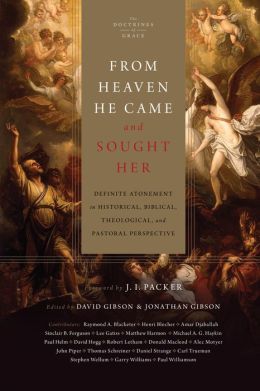
 How often do you find a book on definite atonement? I can probably count on one hand how many I have found on the subject in the last twenty years. Not only seeing a book like this published, but also the size and caliber of the writing made one reader, if I may say, giddy with delight! This book has been needed for years. There has not been a detailed volume on definite atonement of this magnitude since Owen's "Death of Death". Not only is it detailed, it is also very accessible to the average reader.
Now that my voice is lower by a few octaves, I would like to talk about the contents of the book. Here, we not only have a volume on the doctrine itself, we also have its history, its theology, and its use in pastoral practice. Not to mention a great Bibliography at the end. At 704 pages, who could ask for more?
The four sections are divided as follows:
1. Definite Atonement in Church History
2. Definite Atonement in the Bible
3. Definite Atonement in Theological Perspective
4. Definite Atonement in Pastoral Practice
The first section takes us through names such as Augustine, Calvin, Beza, and the like. We see that even though many did not specifically teach the doctrine, they did build the foundation for which the doctrine would be built. If they had lived at a later time, it would probably have lead to the same.
The second section leads us through the bible. We see what scripture teaches concerning who Jesus died for. Did he die to save or just to make men savable? Did the Father have one desire and Jesus and the Holy Spirit another? What about the texts that proclaim that Jesus died for all?
This section and the next are the meat of the book.
The third section concerns Theology. It shows that definite atonement logically fits with the other doctrines of the bible. There is no contradiction with the central doctrines of the word.
The last section takes a look at the pastoral benefits that come with the doctrine. How can we have assurance that we are of the elect? What about the unevangelized? Who gets the glory for Salvation?
I eagerly awaited reading this book and it did not disappoint.
I would considered this one of the top two books I have read this year.
I highly recommend it and give it 5 out of 5 stars.
I received this book, free of charge, from Crossway and Netgalley in exchange for an honest review.
 Being both a Charismatic and a Calvinist made this book a must read for me. Even though I became a Calvinist before it was cool, I have seen many of my friends over the years do the same. I did not realize that there were more like me out there(both Charismatic and Calvinist) until I started to hear a few names being thrown around.
Little by little we started seeing young men who were tired of shallow preaching and even shallower Christian books. These guys were reading books by Sproul, MacArthur, and the like. They had a heart for theology and culture. It was a breath of fresh air.
At one time, it was almost impossible to find a book on predestination, the atonement, the Puritans, or the Reformation at the local Christian bookstore. If you did get a book on one of these subjects, it had to be ordered special. Now there is a wide variety of titles readily available at almost any neighborhood Christian Bookstore. Wow how things change!
Most books written from a Reformed perspective are probably from someone considered a "New Calvinist" In this book, Jeremy Walker gives us insights into the positives and negatives of the movement. Even though I do not consider myself exactly in the "New Calvinist" camp, I would be amiss to say I did not read and enjoy their books.
I have enjoyed Piper, Keller, Grudem, and many others. In fact, I probably would have considered myself a "New Calvinist" if it were not for a few inconsistencies from some of their writers. But the writers I just listed are not the ones I am referring to.
I liked this book. It was a little like taking medicine. It tasted bad going down, but I knew I would feel better after taking it. It is easier to admit faults in your neighbors than it is in your own family. It is like the old saying, "I can yell at my sister, but you better not!"
Walker did a great job in critiquing without destroying. He spent time on both the good and bad aspects of the movement. I respect that and commend him for a job well done.
I hope this book leads to a correction in many areas and a strengthening of the body of Christ.
It was a very interesting read. The only negative I had was it should have been 1000 pages long and packed full of footnotes. But I am just being facetious.
I don’t agree with everything but still I highly recommend it and give it 5 out of 5 stars.
I received this book, free of charge, from EP Publishers in exchange for an honest review.