 Justification is a great doctrine to study in the Bible. It is so fundamental. Without it our salvation would be non-existent.
There is so much logic to how God accomplished our salvation. God can not disregard the Law that He gave. The Law shows the very character of God. He can not deny Himself.
Justification is a great doctrine to study in the Bible. It is so fundamental. Without it our salvation would be non-existent.
There is so much logic to how God accomplished our salvation. God can not disregard the Law that He gave. The Law shows the very character of God. He can not deny Himself.
- How can God justify the guilty?
- How can He forgive their sin and still be just?
- Can a judge forgive the guilty without destroying justice and without becoming an unjust judge?
Vickers answers these and other questions in this wonderfully written book.
It was a joy to see God's plan unfolded in each page. All glory is given to the one who accomplished our salvation. It is not about us and what we do. It is about what Christ done. He is our righteousness. He took our punishment. We are righteous through Him. Works come because we are justified, not to accomplish it.
It is not of ourselves, so that we can not boast. We are totally reliant on God, who is both Just and the Justifier.
I had already read Vicker's book, "Jesus’ Blood and Righteousness". That book was about imputation. This book covers some of the same ground, but focuses more on Justification.
I enjoyed this book. It is packed with good exegesis and I love a book with footnotes! It is neither a simplistic read nor a chore. He takes some deep truths and explains them to the satisfaction of the new and mature believer alike.
His section on James is great.
I highly recommend this book and give it 5 out of 5 stars.
I received this book free of charge from P&R Publishing and NetGalley in exchange for an honest review.

James White is best known for his debates. I first heard of him when reading up on the King James Only debates. After that I was hooked. He has penned some great books concerning subjects like Calvinism, Roman Catholicism, and Homosexuality.
People may disagree with him but they could never say he does not know his stuff. This book is no exception. He has been debating Islam for years now. He was talking about it even before Christians knew it would be a factor.
I knew a little about Islam before, but only bits and pieces. White explains in the introduction:
The reality is that there are areas—one being Islam in general and the Qur’an in particular—in which the literature is so vast, and the terminology gap so large, that the resultant task is, or at least seems, too daunting for even the most committed believer.
White takes these vast resources and summarizes them for our benefit. Islam is growing faster than we could ever imagine. You would think after what happen on 9-11 that people would shun a religion that believes people should convert or die. But we live in a world where people would rather embrace a lie than to believe the truth.
White’s book is very understandable. He starts with a short biography of Mohamed then moves on to exegete the Qur’an itself. He shows the differences in Islam and Christianity. He exposed Islam for the false religion it is.
I really liked this book. I highly recommend it and give it 5 out of 5 stars.
I received this book free of charge from Bethany House Publishers and NetGalley in exchange for an honest review.
 Part of the “Bitesize Biographies” series, John Crotts has penned a very good biography of one of the greatest men of church history. John Newton will always be know as the slave trader, turned slave, turned saint.
Most know John Newton for the most recognized hymn in history - "Amazing Grace". Even those who know nothing of the gospel have heard and probably know the first verse of the hymn.
In this book, Crotts shows there is so much more to Newton than most people know. Easy to read, this book moves you along to the end like a good movie. It leaves you wanting more.
Newton started out with a godly mother, but after her death, he no longer had a Godly influence. He then moved away from the morals she taught him into a life of debauchery. He was a sailor who lived his life with drinking and cursing.
Incidence after incidence, throughout out his life, God saved him from tragedy, but Newton would not give in. After becoming a slave himself, the Lord finally broke him. After being saved, Newton became a pastor. For the rest of his life he would minister to people from all walks of life. He loved those in and outside of his own denomination. Sometimes this got him in trouble with the people of his denomination.
My favorite part of the book was the last two chapters. One chapter considers the hymns written by Newton, the other considers the letters written by him. I believe these are the heart of the book. They show the result of his godly life and how God's grace is the center of everything.
I recommend this book and give it 5 out of 5 stars.
I received this book free of charge from EP Books and Cross Focused Reviews in exchange for an honest review.
 I normally do not review secular novels. I read them from time to time, but usually for my own enjoyment. In this case I saw that the novel that inspired the move "Die Hard" was up for review and I could not resist.
I have always loved action movies, but hate that many have such bad language. The same is true of the action novel. Stephen King, Dean Koontz, etc. are great writers. They can really grip you with a story, but the language is pretty bad sometimes. The same thing takes place here. It had some foul language, but not as much as the movie.
The book itself was a good read. The story keeps pushing you to read another chapter. Because I saw the movie years ago, I kept seeing Bruce Willis on every page.
The story is about an ex-detective, Joseph Leland, who takes a trip to see his daughter. At his arrival, the company she works for is invaded by terrorist. From there, Leland trys to both kill the terrorist and save the hostages.
The book reads like a movie. There is a bonus section at the end. They discovered the notes Thorp made when he outlined the book. It adds some very interesting info to the story.
I thoroughly enjoyed this book and recommend it but with a caution concerning the language and give it 4 out of 5 stars.
I received this book free of charge from Graymalkin Media and Netgalley in exchange for an honest review.
 This year my son and I watched through the Lord of the Rings Trilogy and The Hobbit. I never thought I would hear him say that he liked it better than Star Wars. He did and I heartily agree. The movie changed my whole view of the fantasy genre.
This is where the book comes in. The day after we finished the movies I saw "On the Shoulders of Hobbits" was available for review. What great timing. Finishing the movies made me long for more of the story.
Markos takes us through the story of Bilbo, Frodo, and Sam as they make their way through the journeys they were destined to take. We see how that relates to the journey in life we all take. Even though Tolkien says his stories are not allegory, they are a reflection of the very trials and suffering every Christian faces on our daily walk through life.
Markos not only teaches through Tolkien's books, he also ends each chapter with some thoughts on C.S. Lewis and Narnia.
We learn from this book about the friendship between both men. I had read a lot about Lewis, but Markos shows more of the relationship between him and Tolkien. The bits of trivia throughout the book are very interesting.
There is also a great annotated list at the end, showing other books to read concerning both Tolkien and Lewis.
I thoroughly enjoyed this read and would suggest it to any Lewis or Tolkien fan.If you have watched any of the "Lord of the Rings" or "Narnia" movies, you have to read this book!
I give it a 5 out of 5 stars.
*I received this book free of charge from Moody Publishers in exchange for an honest review.
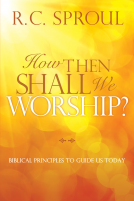 R.C. Sproul is always a good read. This book is no exception.
Worship is a controversial subject these days. The biggest question is: Should worship be contemporary or traditional?
Sproul's book speaks very little about style. He focuses more on the other aspects of worship, Baptism and the Lord's supper are the the main ones that come to mind. He also speaks of the buildings we worship in and the posture we use while worshiping.
Worship should also contain things that involve the senses. Taste, touch, smell, etc. - all of these should be involved some way. Wine, bread, stories, objects - Jesus used them all to show us what the kingdom is like.
While not as good as some of his classics, this is style a good read. As a bonus, a study guide is included at the end.
I enjoyed this book and recommend it.
I give it a 4 out of 5 stars.
I received this book free of charge from David C Cook and NetGalley in exchange for an honest review.
 Glenn's book is basically a commentary on the beatitudes. He shows us upfront that we do not perform them to enter the kingdom, but we perform them because we have already entered the kingdom. They are not a chore that we should do to make God love us. They are the fruit produced from a loving father.
He moves through each beatitude, showing what the meaning is and how it relates to the Christian life.
This is part summary - part review of the book.
Glenn's book is basically a commentary on the beatitudes. He shows us upfront that we do not perform them to enter the kingdom, but we perform them because we have already entered the kingdom. They are not a chore that we should do to make God love us. They are the fruit produced from a loving father.
He moves through each beatitude, showing what the meaning is and how it relates to the Christian life.
This is part summary - part review of the book.
What does it mean to be poor in spirit?
When we realize that we can not enter the Kingdom of God with our good works, we are on our way to finding out.
To be poor in spirit is to understand that Christ is our righteousness. He had to pay the price. We are poor. We have no way to pay our own price. He becomes our payment.
Why are those who mourn, blessed?
They are blessed because of the comfort they receive, not the mourning they endure. We can not mourn until we realize that our sin is something to mourn about. When we see how our sin is opposed to God, we will truly mourn.
God can not comfort us with the good news of the gospel until we mourn over the bad news of the law. We deserve hell. We have sinned against the Creator.
What does it mean to be meek?
Jesus was meek, but he turned tables over in the temple and ran out the money changers. Meek does not equal weak. Meekness means we do not put our self interests first. Jesus did not defend Himself. He had every right to. He never sinned. But we, on the other hand, deserve many of the things people accuse us of. We are sinful.
Hungering for righteousness?
We have to realize that we are not righteous. True righteousness comes only from Christ. We should hunger for the righteousness that we could never achieve on our own.
What is it to show mercy?
Mercy is to absorb the other person's need or wrong. It can not just disappear, it has to be taken away.
What does it mean to be pure in heart?
It does not mean to be nice. Nice people still go to hell. The gospel doesn't want to make you nice. It wants to remake you into a new creature. To be truly pure in heart does not mean to be perfect. It means to be truthful. To admit that your heart is not pure is to be pure in heart.
What is a peacemaker?
We are to bring people together in harmony just as Jesus made peace between us and the farther. It is one who helps reconcile people to each other and to God.
Ultimately Jesus fulfills each of the beatitudes. Because He is the fulfillment, we can do those things spoken of. It is out of love and not command. They are a description of those who have already entered the kingdom.
This was a very engaging book. Short and to the point, it shows us each beatitude and what it means. The Gospel is not a set of moral codes, it is an exchange of my unrighteousness for His righteousness. The beatitudes show us how that exchange is to be lived out.
I recommend this book and give it 4 out of 5 stars.
I received this book free of charge from Shepherd Press and Cross Focused Reviews in exchange for an honest review.
 Justification is a great doctrine to study in the Bible. It is so fundamental. Without it our salvation would be non-existent.


